Cairns at a Crossroads: Urban Development, Housing Challenges, and Future Opportunities
Introduction: A Developer's Perspective on Cairns' Evolution
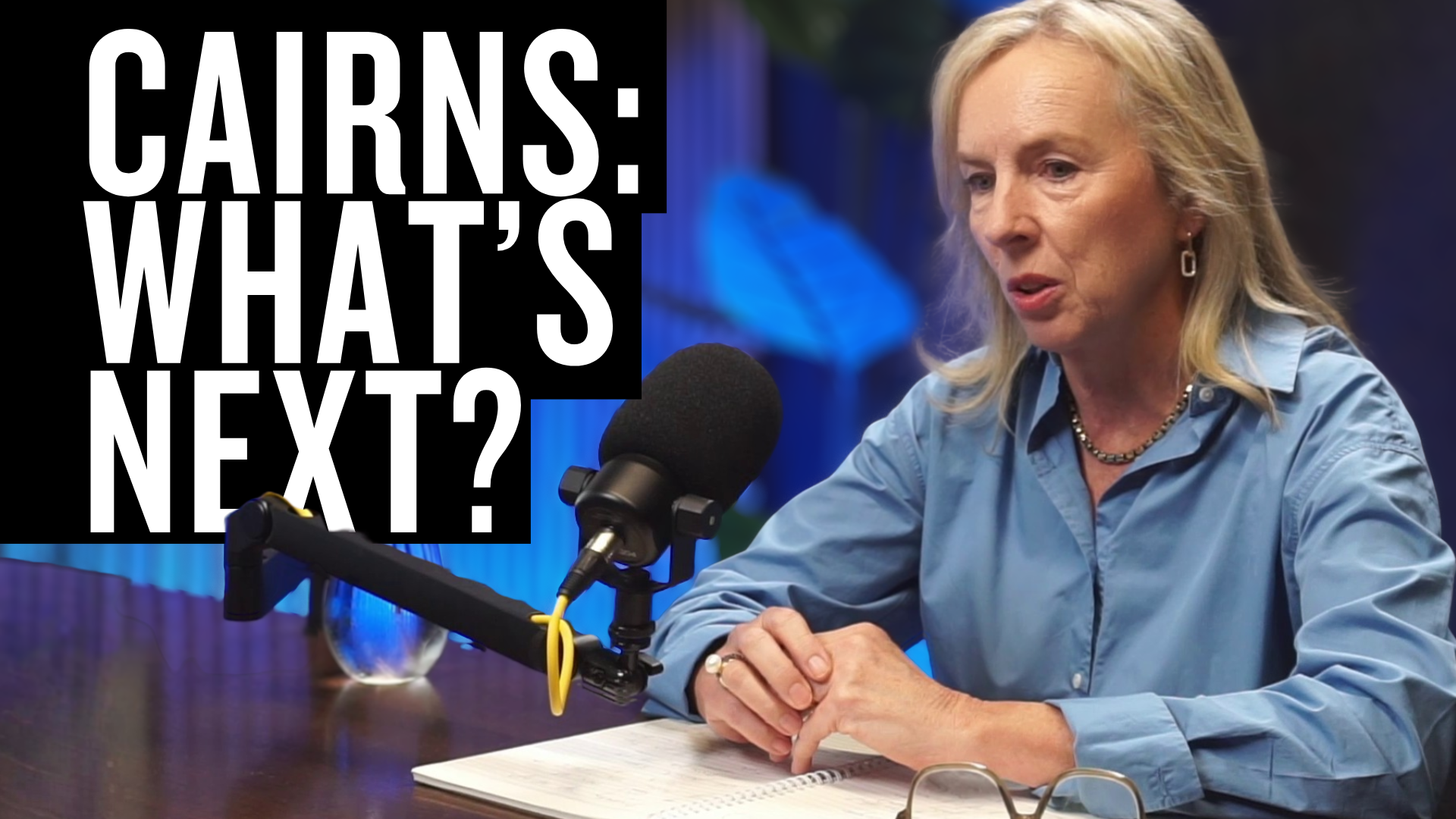
In Cairns' dynamic urban landscape, few voices carry as much weight as Sarah Mort, Managing Director of MiHaven. With nearly two decades of experience in the local development industry, Sarah has witnessed firsthand the transformation of this regional city and the complex challenges it now faces. What began as a three-month visit turned into a lifelong commitment, much like the "spell Cairns casts on people" that she describes.
In a recent interview, Sarah shared invaluable insights about Cairns' development trajectory, drawing from her background in town planning and extensive experience with projects ranging from boutique infill developments to large-scale accommodation solutions. Her perspective reveals a city at a critical juncture, balancing growth pressures with unique geographical constraints and infrastructure limitations.
The Population Growth Forecast: Getting the Numbers Right
At the heart of Cairns' development challenge lies a critical planning dilemma. The regional planning scheme predicts population growth between 1% to 1.5% annually, but there are concerns that conservative estimations may underestimate future needs.
"If they get that wrong, it's a miss of about 50,000 people over the planning period," Sarah explains. To put this in perspective, that's roughly the equivalent of missing an entire town in planning calculations.
The Mathematics of Growth
With Cairns' current population approximately 180,000-200,000, the difference between 1% and 1.5% growth creates significant implications:
1% growth: ~2,000 new residents annually
1.5% growth: ~3,000 new residents annually
10-year impact difference: approximately 10,000 people
This forecasting challenge isn't unique to Cairns. Application development teams globally face similar planning and scalability challenges, where underestimating growth can lead to systemic failures .
Infrastructure Implications
Sarah emphasizes that inaccurate projections create a domino effect on infrastructure: "The big challenge really is your infrastructure right down to your hospitals, your water, and the crisis we've been in the last few years with our water." She notes that infrastructure development typically lags 20 years behind population growth, creating perpetual pressure points that never fully resolve.
The Land Shortage and Housing Affordability Crisis
Cairns faces a fundamental geographical constraint that Sydney would recognize immediately: "We're very much like Sydney—you've got mountains down one side, you've got the ocean on the other." This linear urban form creates natural boundaries to expansion.
"We have literally run out of land," Sarah states plainly. "The cost to develop has now doubled to what we saw before COVID." This scarcity compounds into an affordability crisis that affects the entire community.
The Density Dilemma
The solution, according to Sarah, lies in embracing thoughtful density. "I personally love the density of this city," she shares, "but I know it definitely has to go into a higher load of density to deal with the population growth."
However, she emphasizes that density must be implemented correctly: "You can whack a whole lot of units up and do it wrong, or you can do it in a really tasteful, meaningful way that suits the character of the city."
Sarah's company pioneered this approach years ago, proving that high-quality houses on 200m² lots could provide excellent livability while maximizing land use. The challenge has been scaling this model effectively.
Community Acceptance as the First Hurdle
"The community has to come on board and say we can deal with density," Sarah observes. She believes political will must be backed by community understanding of the city's changing face and the tolerance required for a sustainable future.
This challenge extends beyond residential acceptance to practical implementation. As in mobile development, where creating intuitive user experiences across different devices remains challenging , urban designers must create density solutions that work across diverse community needs.
Economic Diversification: Beyond the Tourism Narrative
One of the most promising revelations about Cairns' future is its economic transformation. "Cairns has now been identified as the most diversified regional economy," Sarah notes, marking a significant shift from the traditional tourism-dependent identity.
The Emerging Economic Drivers
Healthcare Services: Now the number one employer in the region, driven by aging population and NDIS, with the cancer hospital serving as a major regional hub
Aviation Engineering: Companies like Jet Aviation have operated for 20+ years, servicing aircraft from PNG, South Pacific, and Asia
Specialized Technical Services: Transient workforces for marine and superyacht industries, with specialized engineers arriving for 3-6 month contracts
Defense and Military: Contributing to passenger movements through the airport
Airport Growth as an Economic Indicator
The Cairns Airport serves as a powerful economic barometer. "The airport forecasts basically doubling passenger numbers over the next 10 to 15 years," Sarah shares. "Where are they coming from? They're not all tourists, I can tell you that."
This growth creates ripple effects throughout the economy, particularly for accommodation needs that extend beyond traditional tourism models.
Case Study: SkyHaven – A New Model for Accommodation
The SkyHaven project at Cairns Airport exemplifies the innovative approach required to meet the city's evolving needs. This $60 million development represents a hybrid accommodation model that addresses multiple market gaps simultaneously.
Addressing the Transient Workforce Challenge
Through extensive research, Sarah's team identified a critical gap in the market: "There's this huge transient population that works in Cairns for up to 3 months." This includes:
Aviation engineers on three-month contracts from Europe, Canada, and Ireland
Healthcare professionals (80-100 monthly allied health workers)
Defense and emergency services personnel, particularly during cyclone season
Specialist contractors across multiple industries
Innovative Design Solutions
The project incorporates purpose-built design elements specifically for the Cairns context:
Self-contained rooms with cooking facilities alongside traditional hotel amenities
Advanced acoustical engineering to mitigate airport noise
Tropical design considerations to reduce mold and improve livability
Three-story walk-up construction to minimize complexity and cost
Strategic Land Use Model
A key innovation is the leasehold land model, which significantly reduces upfront costs. "If we had translated that land into the CBD, we'd probably be $10 million holding costs for two years," Sarah explains. This approach enables more viable development economics in a challenging market.
Lessons for the Future: Building a Resilient Cairns
Sarah's experience yields several critical insights for Cairns' continued development:
Embrace Diverse Housing Models
Beyond traditional housing and hotels, Sarah sees growing need for specialized accommodation models:
Co-living spaces for single professionals
Shared housing solutions for single women over 50, identified as a particularly vulnerable demographic
Build-to-rent models that could address the "sweet spot" in the $750,000 market
Prioritize Infrastructure Advocacy
"We need to scream from the top" about ensuring adequate infrastructure funding, Sarah urges. The competition with Southeast Queensland for resources requires consistent community advocacy to ensure Cairns receives its fair share.
Balance Innovation with Practicality
Throughout her projects, Sarah emphasizes research-driven design and attention to detail. From understanding exactly what transient workers need in accommodation to designing buildings that work with Cairns' climate rather than against it, this meticulous approach delivers better long-term outcomes.
Conclusion: Building Tomorrow's Cairns Today
Cairns stands at a pivotal moment in its development journey. The challenges of population growth, land constraints, and infrastructure pressures are significant, but they're matched by unprecedented opportunities for economic diversification and innovative development.
As Sarah Mort reflects on her unexpected journey from short-term visitor to established developer and community advocate, she embodies the passion and commitment that will drive Cairns' successful evolution. "James and I are not leaving Cairns," she states definitively. "We've decided this is our home forever."
For investors, developers, and community members, the message is clear: Cairns' challenges contain the seeds of its opportunities. By embracing thoughtful density, supporting economic diversification, and championing innovative projects that meet real community needs, we can collectively build a Cairns that honors its unique character while embracing its promising future.
Watch this incredible interview in full on YouTube Now (https://youtu.be/wL1-J7Rb-BY)
This article was developed from a recent interview with Sarah Mort, Managing Director of MiHaven, with additional context from contemporary urban development research. For further information about the SkyHaven project or MiHaven's development portfolio, take a look at their website https://www.mihaven.com.au/
